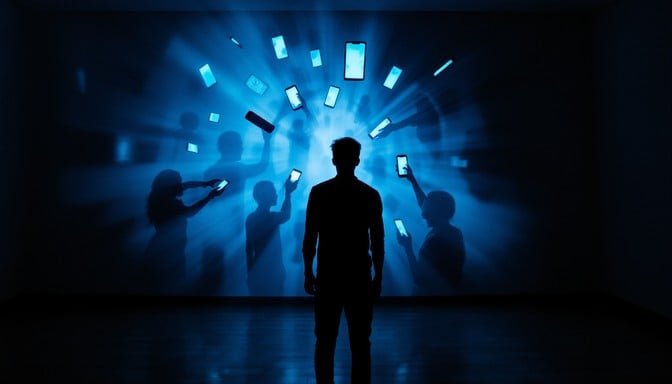

In the digital landscape of 2026, we are theoretically the most “connected” generation in human history. We can broadcast our thoughts to thousands in an instant and maintain passive awareness of the lives of hundreds of acquaintances. Yet, despite this massive digital reach, rates of reported loneliness are at an all-time high. This is the reality of the modern connection gap: a state where we possess an abundance of social “data” but a poverty of true emotional intimacy.
The Dunbar Limit and Digital Overload
The human brain was not designed for the infinite scale of the internet. Evolutionary psychologist Robin Dunbar famously suggested that humans are cognitively capable of maintaining about 150 stable social relationships. Beyond this number, the brain struggles to track the nuances and emotional histories required for genuine trust.
In the modern era, we have effectively diluted our 150 “spots” with hundreds of low-stakes digital acquaintances. We spend our limited emotional energy “keeping up” with people we barely know, leaving us with a shallow social pool where no one is close enough to call during a crisis. We are substituting “thick” relationships—those built on shared time and physical presence—with “thin” digital interactions that provide the dopamine of a “like” without the oxytocin of a hug.
The Illusion of Social Maintenance
One reason the modern connection gap feels so pervasive is that digital platforms create an illusion of relationship maintenance. Scrolling through a friend’s Instagram stories or reacting to their LinkedIn update feels, to our subconscious, like we have “interacted” with them.
However, true social maintenance requires reciprocity and focused attention. Passive consumption is “frictionless,” while real friendship involves “friction”—difficult conversations, showing up in person, and navigating disagreements. When we prioritize frictionless digital bonds, we lose the “social muscle” required to sustain the deep, messy connections that actually alleviate loneliness.
Closing the Gap in 2026
To bridge this gap, we must move from a mindset of social breadth to one of social depth. This involves a conscious “pruning” of our digital circles to make room for the people who truly matter.
Digital Boundaries: Use 2026 “Focus Modes” to limit low-value social notifications, freeing up mental space for the deep work of building intimacy.eople who will actually pick up the phone when it rings at midnight.
The “Crisis Call” Audit: Identify the three to five people you would feel comfortable calling at 3 AM in an emergency. If you haven’t spoken to them in a month, your social priorities are misaligned.
Analog Interventions: Replace one hour of passive scrolling with one twenty-minute phone call or a face-to-face coffee date.