In the fast-moving world of 2026, we feel more connected than ever before. We have the entire sum of human knowledge in our pockets. We can message anyone on Earth in seconds. However, there is a growing sense of mental exhaustion that we cannot ignore. We are living in a state of Digital Paleolithic tension. This is a profound mismatch between our ancient biological hardware and our modern digital software. While our technology has advanced at light speed, our brains are still running on software that is 50,000 years old.
The Biological Mismatch of the Modern Era
Our ancestors lived in small, tight-knit tribes. They faced physical threats like predators and food scarcity. Consequently, the human brain evolved to prioritize survival and social cohesion above all else. It developed a highly sensitive “threat detection” system. It also created a dopamine-driven reward loop for finding new information about the environment. This system was perfect for the Savannah. It is, however, a disaster for the smartphone era.
[Image Suggestion: A split illustration showing a hunter-gatherer and a modern person with a smartphone. Alt text: The Digital Paleolithic mismatch between ancient brains and modern tech.]
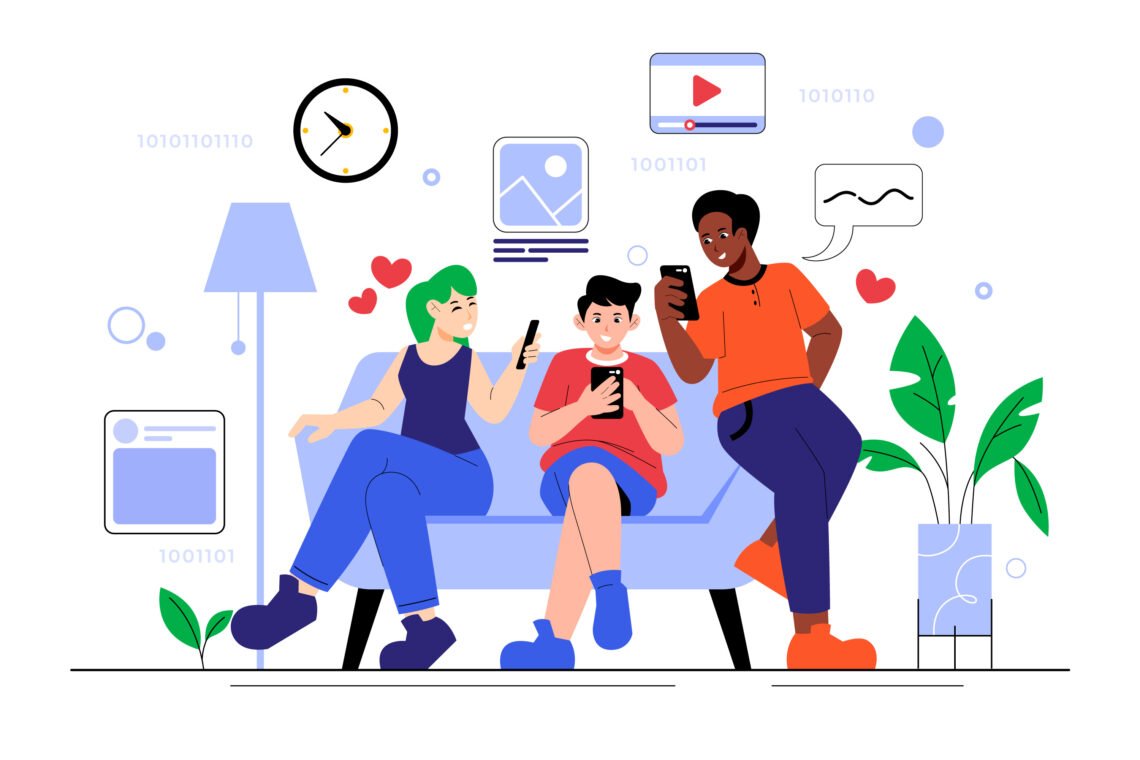
In the Digital Paleolithic, your phone exploits these ancient circuits. Every notification is treated by your brain as a potential survival signal. Every red bubble on an app triggers a tiny hit of cortisol. Your brain thinks there might be a “threat” or a “social opportunity” that requires immediate attention. Therefore, you are in a permanent state of low-level fight-or-flight. You are not just checking your emails. Instead, your ancient brain is scanning the digital horizon for predators that do not exist.
The Death of Deep Focus and the Rise of Fragmentation
The human mind was built for “The Quality of Silence” and long periods of focused observation. Hunting or foraging required deep, sustained attention. In contrast, the digital world is a machine built for fragmentation. We jump from a news headline to a private message to a short-form video in seconds. This constant switching is an “Evolutionary Mismatch” that drains our cognitive energy.
Consequently, we lose the ability to think deeply. When we fragment our attention, we never reach the “Flow States” that our ancestors used for survival. We are becoming “expert skimmers” of reality. This is a key part of the Digital Paleolithic crisis. We have infinite information, but we have zero synthesis. Therefore, our “Second Brain” is full of bookmarks, but our “First Brain” is tired and empty. We have traded the depth of the forest for the shallow noise of the feed.
Social Comparison in a Global Tribe
Our ancestors only compared themselves to the twenty or thirty people in their immediate tribe. This was a manageable social hierarchy. In 2026, the Digital Paleolithic brain is forced to compete with eight billion people. When you scroll through social media, your brain does not realize the images are filtered. It simply sees thousands of people who are “more successful” or “more attractive” than you.
| Feature | Ancestral Environment | Digital Paleolithic Environment |
| Tribe Size | 50–150 people | 8 billion potential “competitors” |
| Information Speed | Slow and sensory-based | Instant and algorithmically curated |
| Social Feedback | Direct and physical | Anonymous and quantified (likes/views) |
| Stress Duration | Acute and short-term | Chronic and permanent |
This creates a permanent sense of social insecurity. Your brain feels like it is at the bottom of the tribe’s hierarchy. Consequently, you experience “The Slow Fade” of self-esteem. You are constantly performing for an audience that does not actually care about you. This is the “Main Character Syndrome” taken to a biological extreme. We are trying to win a popularity contest that has no finish line.
The Dopamine Trap of Infinite Novelty
Dopamine was originally designed to make us forage for food or mates. It rewarded us for finding something “new” in the environment that could help us survive. In the Digital Paleolithic, the “new” thing is always just a thumb-swipe away. The smartphone is essentially a high-tech “slot machine” that we carry in our pockets.
Therefore, we are stuck in a “Feedback Loop Prison.” We seek the next hit of novelty even when we are bored or miserable. This constant stimulation numbs our reward system. Eventually, normal life starts to feel gray and uninteresting. We lose “The Sonder Solution”—the ability to find joy in the complex, slow reality of the people around us. We are digitally overstimulated but biologically starved for real connection.
Reclaiming the Ancient Mind in a Digital World
We cannot delete the technology, but we can change our relationship with it. We must move toward “Digital Sovereignty.” This means setting boundaries that respect our biological limits. It requires us to intentionally reintroduce “Useful Hardship” into our lives.
Instead of seeking the frictionless life, we should seek the “The Comfort Crisis.” We must allow ourselves to be bored. We must leave the phone at home and walk into the world with nothing but our senses. Consequently, we give our 50,000-year-old brains the “The Quality of Silence” they need to recover. We must stop being the observers of our lives and start being the participants.
True well-being in 2026 is found in the gaps between the notifications. It is found in the “Secret Passion” that no one sees on a screen. By understanding the Digital Paleolithic, we can stop blaming ourselves for our lack of focus. We can realize that we aren’t broken. We are just ancient beings trying to survive in a world that moves too fast. Put the phone down. The Savannah is calling, even if it is just your local park.