In the social landscape of 2026, we are obsessed with “moral bookkeeping.” We track our carbon footprints, we curate our ethical consumption, and we publicly align ourselves with virtuous causes. We like to think that every good deed we perform adds a brick to the fortress of our character.
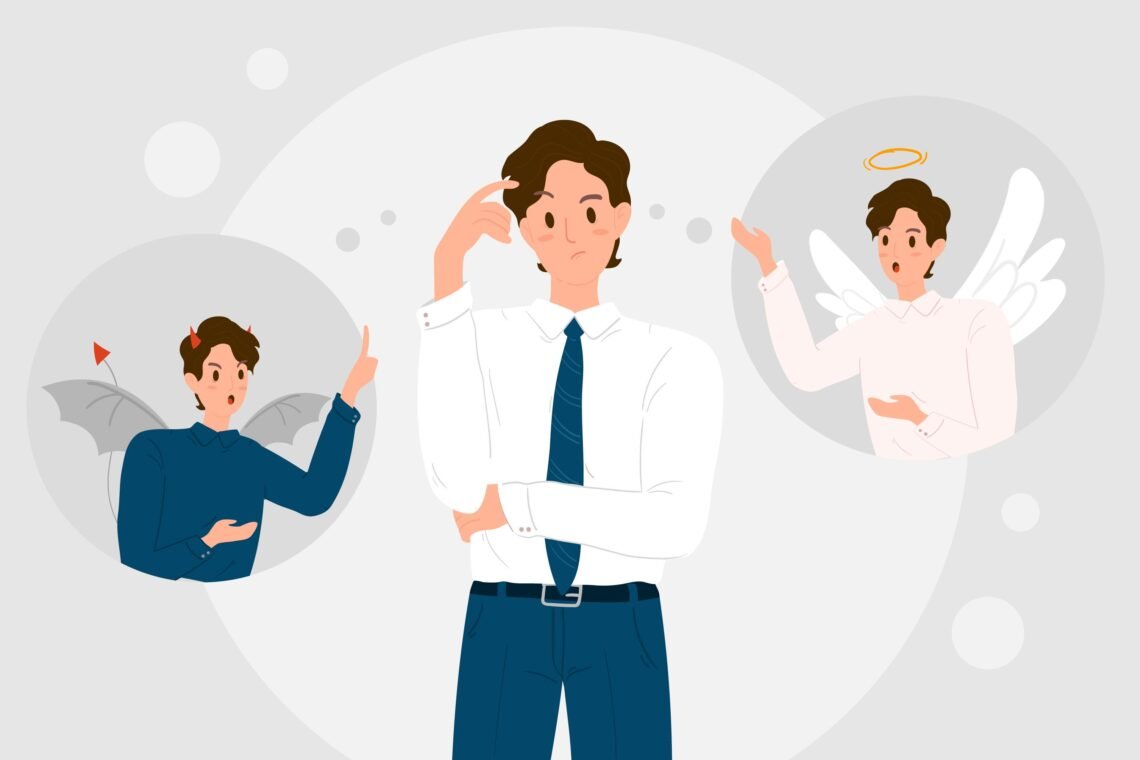
However, psychology suggests the opposite might be true. Instead of building a fortress, our good deeds often act as a “get out of jail free” card. This is known as Moral Licensing. It is the subconscious phenomenon where doing something “good” gives us a sense of entitlement that allows us to do something “bad” later without feeling guilty. It is the reason why “good” people often do very bad things.
1. The Internal Bank Account
Moral Licensing operates on a “bank account” metaphor. In our minds, we maintain a running balance of our own virtue. When we do something that aligns with our ideal self—like going to the gym, recycling, or working late—we “deposit” moral capital.
Once we feel our balance is high enough, we feel entitled to a “withdrawal.” This is why someone who spends all morning volunteering might feel justified in being incredibly rude to a cashier in the afternoon. They aren’t thinking, “I am a mean person.” They are thinking, “I’ve been so good today that I’ve earned the right to vent my frustration.” We use our past virtues to bribe our current conscience.
2. The “Health Halo” and the Salad-Burger Loop
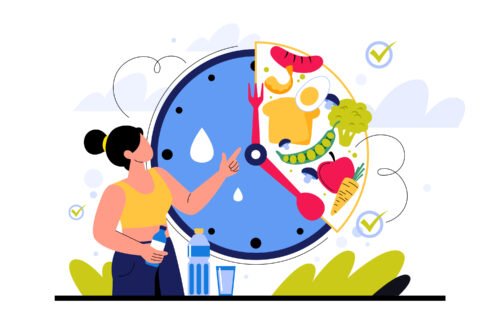
One of the most common places we see Moral Licensing is in our physical habits. It is often referred to as the “Health Halo.”
In a famous study, participants were asked to choose a meal from a menu. Those who chose a healthy salad as their entree were significantly more likely to choose a high-calorie, unhealthy dessert and a sugary soda than those who didn’t have the salad option. By choosing the “virtuous” salad, they gave themselves the “license” to overindulge elsewhere.
This creates a cycle where we “neutralize” our progress. We eat the salad so we can eat the cake; we go for a run so we can sit on the couch for six hours. We aren’t moving forward; we are just treading water in a pool of self-justification.
3. The Virtuous Outsider: Moral Licensing in Social Justice
In 2026, Moral Licensing has taken on a digital dimension. We see this frequently in “Performative Activism.”
When someone posts a black square, a rainbow flag, or a hashtag for a cause, they often feel a surge of moral satisfaction. Studies have shown that people who are given the opportunity to express non-prejudiced attitudes (like saying they would vote for a minority candidate) are actually more likely to make a prejudiced decision in a subsequent task.
Because they have “proven” to themselves that they are not racist or bigoted through a public gesture, they feel they have a “license” to ignore their own subtle biases in private. The public “good deed” becomes a shield that protects them from self-criticism.
4. Why “Ethical” Companies Often Fail the Ethics Test
The Moral Licensing trap doesn’t just apply to individuals; it applies to organizations. This is why some of the most “mission-driven” companies—those that claim to be “saving the world” or “changing lives”—often have the most toxic internal cultures.
When a company’s overarching mission is seen as “Good,” the employees and leaders often feel they are exempt from standard ethical boundaries. They may justify overworking staff, cutting corners on safety, or engaging in aggressive business tactics because “the end justifies the means.” Their “Moral License” is the mission itself. They believe they are the “Good Guys,” and because they are the good guys, anything they do must be, by definition, okay.
5. The Danger of “Vicarious” Licensing
We don’t even have to do the good deed ourselves to feel the license. We can experience Vicarious Moral Licensing.
This happens when we identify strongly with a virtuous group or leader. If you belong to a church, a political party, or a social movement that you perceive as highly moral, you may subconsciously “borrow” that morality. You feel that because your group is good, you are inherently good, which can lead to a decrease in your own personal ethical vigilance. This is how “moral” movements can often descend into “immoral” behavior—the members feel they have a permanent license because they are on the “right side of history.”
6. Breaking the Trap: Values vs. Credits
To escape the Moral Licensing trap, we have to change how we view our actions. We have to move from a “Credit” mindset to a “Values” mindset.
- Credits Mindset: “I did X (good), so now I can do Y (bad).” This treats morality as a chore that earns you a reward.
- Values Mindset: “I did X because it is the kind of person I want to be.”
When you view a good deed as an expression of your identity rather than a deposit in a bank, the “license” disappears. Going to the gym isn’t a “credit” that lets you eat a box of donuts; it’s an act of being a healthy person. When a behavior is part of your identity, doing the “good” thing makes you more likely to do the next “good” thing, not less. This is known as Moral Consistency.
Conclusion: The Mirror of Virtue
Moral Licensing is a reminder that our greatest threat isn’t our obvious flaws, but our perceived virtues. When we think we are “bad,” we are often on our best behavior because we are trying to improve. But when we are convinced we are “good,” we become dangerous.
In 2026, the most ethical people aren’t the ones with the longest list of credentials or the most “virtuous” social media feeds. They are the ones who are suspicious of their own goodness. They realize that a good deed is not a shield, but a commitment.
The next time you do something “good,” don’t look for the reward. Look in the mirror and ask: “How can I make sure this virtue doesn’t become a license for my next vice?” Virtue is not a bank account; it’s a practice. And the practice is never finished.