
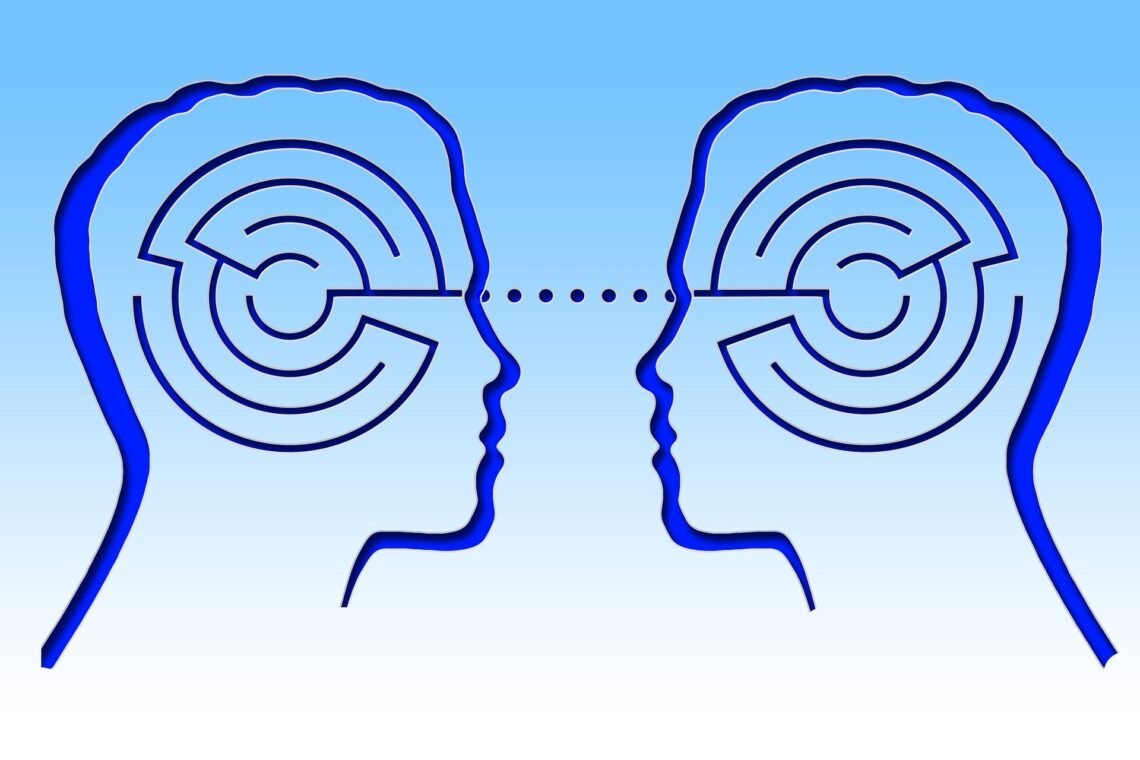
In the hyper-connected landscape of 2026, we have become masters of the digital facade. We spend hours curating our online personas, editing our captions to the perfect degree of “casual,” and selecting photos that project exactly the right level of success and happiness. Yet, the moment we step into a physical room—or even a high-definition video call—a much older, more primitive system takes over. Long before we have finished our first sentence, our body has already constructed a complex narrative in the mind of our observer. This is the Silent Architect: an involuntary, ancient system of non-verbal cues that determines our social standing before we’ve even had a chance to speak our truth.
The Seven-Second Biological Filter
The human brain is, at its core, a survival engine. For the vast majority of human history, the ability to quickly assess a stranger was the difference between life and death. Our ancestors did not have the luxury of long-form interviews or deep personality assessments; they had to know, within seconds, if the person approaching them was a “friend” or a “foe,” a “leader” or a “follower.” While the modern world has changed, our biology has not.
Research consistently suggests that the window of judgment for a first impression is a mere seven seconds. In this fleeting moment, the observer’s amygdala—the brain’s emotional radar—scans for two specific traits: warmth and competence. We tend to think that our words carry the weight of these traits, but studies show that non-verbal cues are over four times more impactful than the actual words spoken. If your body language projects insecurity while your mouth speaks of authority, the listener’s brain will prioritize the physical evidence every time. The Silent Architect is always more believable than the Press Secretary in your head.

The Uncanny Valley of Micro-Expressions
One of the most elusive tools used by this internal architect is the micro-expression. These are involuntary facial movements that occur in as little as a twenty-fifth of a second. They are the “leakage” of our true emotional state—a flash of fear, a flicker of contempt, or a spark of genuine joy that appears before we have the conscious ability to mask it.
In 2026, as high-definition cameras and immersive video spaces become the norm, these micro-expressions are being magnified. When there is a mismatch between our spoken words and these tiny facial flickers, we trigger a sensation in others known as “cognitive dissonance.” The observer might not be able to name exactly what is bothering them, but they will walk away with an instinctive feeling that something was “off” or “inauthentic.” This is why “practicing” a smile often fails; a genuine smile (known as a Duchenne smile) involves the involuntary contraction of the muscles around the eyes, which is nearly impossible to fake on command. To the Silent Architect, a fake smile isn’t just a lie—it’s a structural flaw in the foundation of trust.
The Architecture of Space and Stature
Beyond the face, our physical relationship with the space around us tells a story of status and internal security. In the current era, the prevalence of the “tech-slouch”—a posture shaped by hours hunched over smartphones and laptops—has unintentionally signaled a lack of confidence to the world. When we collapse our chests and tilt our heads downward, we are physically retreating into ourselves. To an observer, this is the architecture of defeat.
Conversely, “open” body language—shoulders back, chest open, and palms visible—is the architecture of transparency and strength. Historically, showing one’s palms was a signal that one carried no weapons. Today, it remains a powerful signal of honesty. Furthermore, our posture doesn’t just influence how others see us; it influences our own chemistry. Adopting a high-power posture for even two minutes has been shown to lower cortisol (the stress hormone) and increase testosterone, effectively “building” a more resilient internal state. We are not just victims of our feelings; we can use our physical architecture to change them.
The Mirroring Principle and the Biological Bridge
Perhaps the most sophisticated technique the Silent Architect employs is “mirroring.” This is the subtle, subconscious mimicry of the posture, gestures, or speech patterns of the person we are interacting with. When two people are in deep rapport, they naturally begin to move in sync—tilting their heads at the same time or crossing their legs in the same direction.
This isn’t manipulation; it is a biological bridge. Mirroring signals to the other person’s brain that you are “like them,” which fosters a rapid sense of safety and empathy. In a world that feels increasingly polarized and digital, the ability to physically synchronize with another human being is one of the most effective ways to break down walls. It is a silent way of saying, “I see you, and I am with you.”
Reclaiming the Silent Narrative
Ultimately, mastering your first impression is not about “acting” or theatrical performance. It is about becoming an intentional designer of your own presence. We often treat our bodies as mere transport for our heads, forgetting that the body is the primary way we experience—and are experienced by—the world.
To reclaim the narrative, we must move from subconscious reaction to conscious design. This begins with grounding: feeling the weight of our feet on the floor before a meeting to project stability. It involves “eye-contact calibration”—maintaining enough connection to show interest without becoming aggressive. Most importantly, it requires alignment. When our inner intent matches our outer architecture, the friction of social interaction disappears. We allow people to see the person we actually are, rather than the distorted story told by a neglected or anxious body. In the end, the Silent Architect’s greatest masterpiece is a presence that feels as solid and honest as the words we choose to speak.