
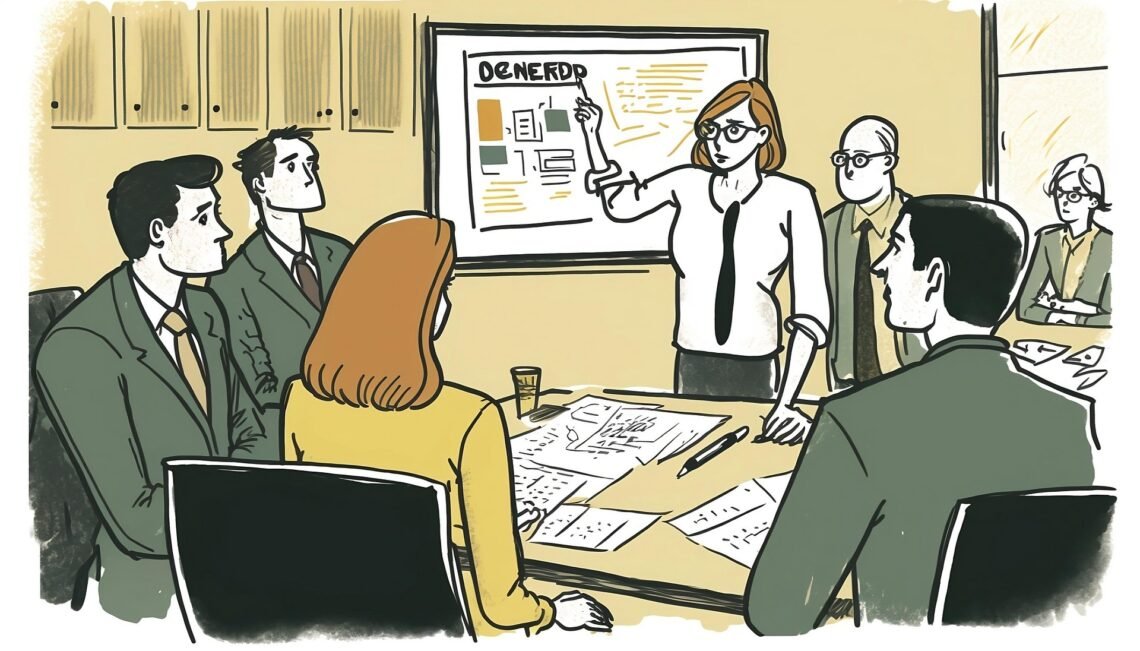
The traditional image of a corporate boardroom resembles a symphony orchestra. A central conductor leads. Every player follows a rigid, pre-written score. In 2026, however, this model is failing. The modern market moves too fast for static scripts. Consequently, successful companies are shifting their culture. They are moving away from the orchestra and toward the jazz club. Thriving businesses today are the ones that know how to improvise. They prioritize fluid collaboration over rigid hierarchies. This shift represents the improvisation advantage in modern business.
The Death of the Five-Year Plan
In the past, leadership relied on long-term certainty. Executives drafted five-year plans with specific, unchanging goals. Today, global shifts occur in weeks, not years. Therefore, a rigid plan has become a liability. When an unexpected disruption hits, an orchestra stops playing because the score is wrong. A jazz band, however, keeps playing. They lean into the chaos. They use the disruption as a new rhythmic foundation.
This flexibility requires a new kind of trust. Leaders must move away from “command and control” styles. Instead, they must empower their teams to make real-time decisions. This is the core of the improvisation advantage. It allows a company to pivot instantly when market data changes. Successful firms in 2026 do not wait for the conductor’s signal. They listen to the “music” of the market and adjust their melody on the fly.

Radical Listening and Collaborative Flow
Improvisation is not the same as “winging it.” Professional jazz musicians spend years mastering their craft. They possess deep technical knowledge. However, they use that knowledge to support the collective flow. In the boardroom, this looks like radical listening. Team members do not just wait for their turn to speak. They listen to the ideas of others to build something better.
This “Yes, And” philosophy is vital for innovation. When a teammate proposes a radical idea, the jazz-style leader does not shut it down. They find a way to incorporate it into the current “song.” Furthermore, this approach reduces the fear of failure. In a jazz club, a “wrong” note is simply a transition to a new harmony. In 2026, the companies that thrive are those that view mistakes as data points. They use errors to refine their next move.
Structural Agility and Fractional Talent
The jazz club model also changes how companies hire. Orchestras need full-time players for every chair. Jazz clubs, however, often feature guest soloists. Modern companies are increasingly using fractional talent. They bring in specialized experts for specific “sets” or projects. This allows for higher agility and lower overhead.
Consequently, the workforce is becoming more modular. A company might have a core rhythm section of permanent staff. They then rotate experts in and out as the market demands. This structural agility ensures that the company always has the right “sound” for the moment. It prevents the stagnation that often kills large, traditional corporations. The 2026 boardroom is a place of constant, high-energy exchange.
Training the Corporate Ear
How does a company start playing jazz? It begins with unlearning the need for total control. It requires a commitment to psychological safety. If employees feel judged for a missed note, they will never improvise. They will simply hide behind the old score.
- Audit Your Meetings: Observe if your team is actually collaborating or just presenting.
- Practice Micro-Pivots: Intentionally change small project parameters to test your team’s reaction time.
- Hire for Adaptability: Look for candidates who have thrived in “messy” or non-linear environments.
- Celebrate the “Wrong” Note: Reward the effort of an experiment even if the outcome was not perfect.
The boardroom is changing forever. The era of the rigid conductor is over. In 2026, leadership is about setting the tempo and letting the band play. Those who master the improvisation advantage will find harmony in the chaos. They will turn every market disruption into a masterpiece.