
For most of human history, information was a scarce and precious resource. Our ancestors traveled miles to exchange news, sat in libraries for days to find a single fact, and waited weeks for a letter to cross an ocean. We were built for a world of information scarcity, wired to hunt for data like our ancestors hunted for calories.
But in 2026, the environment has shifted radically. We no longer live in a world of scarcity; we live in a world of infinite abundance. We are constantly surrounded by an all-you-can-eat buffet of headlines, notifications, tweets, videos, and podcasts. The result is a growing global health epidemic that doesn’t affect our waistlines, but our minds: Information Obesity.
1. The Gluttony of the “Scroll”
Information Obesity occurs when we consume far more data than we can possibly digest or use. Just as the body stores excess calories as fat, the mind “stores” excess information as mental clutter, anxiety, and a fragmented attention span.
The primary delivery mechanism for this “junk food” is the infinite scroll. Social media algorithms are designed to keep us feeding, providing just enough novelty to keep us engaged but never enough substance to make us feel full. We consume “bite-sized” content—15-second clips, 280-character hot takes—that offer a temporary hit of dopamine without any nutritional value for the brain. We are constantly snacking on the news, yet we are starving for wisdom.
2. The Symptoms: Brain Fog and Decision Fatigue
How do you know if you are suffering from Information Obesity? The symptoms are subtle but pervasive.
- Mental Bloat: That feeling of being “full” but unable to focus on a single task. Your brain feels heavy, and your thoughts are sluggish.
- The Paradox of Choice: Because you have access to every opinion on every topic, you find it impossible to make a simple decision. You spend three hours researching the “best” toaster only to end up so overwhelmed that you don’t buy one at all.
- Amnesia of the “Save”: You have 400 open tabs and 1,000 saved articles, but if someone asked you to explain a single concept you “learned” yesterday, you wouldn’t be able to do it.
When the “input” (what you read) far exceeds the “output” (what you do or think), your mental digestive system breaks down. This leads to Decision Fatigue, where your willpower is so drained by processing trivial data that you have nothing left for the choices that actually matter.
3. The “Empty Calories” of Outrage and Trivia
Not all information is created equal. In the world of Information Obesity, we tend to gravitate toward “high-calorie, low-nutrient” content. This usually falls into two categories: Outrage and Trivia.
Outrage is the “sugar” of the digital world. It is highly addictive, spikes our emotional levels immediately, and leaves us feeling exhausted afterward. We spend our mental energy engaging in “discourse” that will be forgotten by next Tuesday. Trivia, on the other hand, is the “processed snack” of information—fun facts, celebrity gossip, and “life hacks” that provide a temporary sense of knowing something without actually improving our lives.
To fix the crisis, we have to stop treating all data as “good” data. We need to differentiate between Knowledge (information that helps us understand the world) and Noise (information that just takes up space).
4. The Digital Fast: Clearing the Clutter
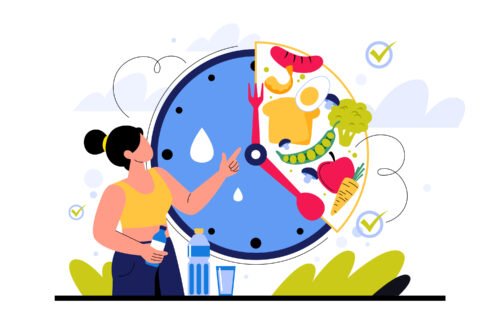
If you were physically obese, the solution wouldn’t be to eat different food; it would be to eat less food and fast periodically. The same applies to your mind.
A Digital Fast is the intentional removal of information streams for a set period. It isn’t about moving to a cave; it’s about giving your brain the “quiet time” it needs to process the backlog of data it has already consumed.
Try the “24-Hour Blackout”: Once a week, consume zero news, zero social media, and zero podcasts. No “educational” videos, no “self-improvement” threads. Just your own thoughts and physical reality. At first, you will feel an intense “itch” to check your phone—this is the digital equivalent of a sugar withdrawal. But once that passes, you will notice a sudden return of mental clarity.
5. The “1-In, 1-Out” Rule for Content
In the world of fashion, enthusiasts often use the “1-in, 1-out” rule: for every new piece of clothing you buy, you must donate an old one. We can apply this to our digital consumption to prevent “Information Hoarding.”
Before you subscribe to a new newsletter, listen to a new 3-hour podcast, or follow a new “expert,” you must unsubscribe from something else. This forces you to evaluate the utility of what you are consuming. Ask yourself: “Is this person helping me solve a problem, or are they just providing a distraction?” By capping your “information intake,” you ensure that you only have room for the highest-quality nutrients.
6. Practicing “Deep Digestion”
The final step in curing Information Obesity is learning how to “digest” what you read. Digestion, in a mental sense, is the act of reflection.
Instead of reading ten articles in an hour, read one article and then spend twenty minutes thinking about it. Write down three takeaways. Discuss it with a friend. Apply one idea from the article to your real life. This is the difference between “Information Consumption” and “Learning.”
Learning requires a “Low-Input, High-Reflection” ratio. When you stop rushing to the next headline and start sitting with a single idea, you move from being an “Information Consumer” to an “Information Producer.” You start to build your own thoughts instead of just renting the thoughts of others.
Conclusion: Reclaiming Your Attention
The Information Obesity crisis is a battle for your most valuable resource: your attention. In 2026, the world is louder than it has ever been, and it will only get louder. The companies that provide the “junk food” for your mind are getting better at making it addictive.
The only way to win is to become a “Minimalist Consumer.” Treat your attention like your bank account—don’t spend it on things that don’t provide a return. Slim down your feeds, embrace the silence of a slow morning, and give your brain the space to breathe. You don’t need more information; you need more focus. You don’t need more news; you need more presence.
The most “well-fed” minds in the future won’t be the ones that know everything about everything; they will be the ones that know exactly what to ignore.